Category: News

  • Coca-Cola Launches NFT For International Friendship Day

    Coca-Cola Launches NFT For International Friendship Day

    These days, a lot of multinational companies are getting into the metaverse and NFTs. We’ve seen everyone from Evian to Starbucks launch NFT-related projects and these show no signs of stopping soon. Many of these projects range from collectables to digital passes that unlock exclusive benefits. 

    One of the latest of such NFT projects comes from the Coca-Cola corporation, which launched a collection to celebrate its one-year anniversary in the metaverse. Not only does the collection, which launched on July 30, 2022, celebrate this anniversary but it also coincided with International Friendship Day.

    NFT and Friendship

    True to its theme, the NFTs in the collection were of digital bubbles, which were to symbolise unity. Rather than having to buy them, they were airdropped on the day to the digital wallets of those who already have Coca-Cola collectables. These collectables offer some perks to their holders, including access to Coke Studio events and limited edition products. But those who didn’t weren’t left out as recipients were able to share a second collectable with a friend, again drawing on the theme of friendship. 

    “International Friendship Day—which launched our metaverse journey in 2021—is the perfect milestone opportunity to thank and celebrate the people who have joined us,” said Pratik Thakar, Head of Global Creative Strategy, Coca-Cola. “We hope to strengthen and expand our ‘Real Magic’ community by building connections through a variety of physical and virtual Coca-Cola experiences.”

    While this airdrop marks Coca-Cola’s first year in the metaverse, its official press release makes it clear that it will not be its last. As per the statement, Coca-Cola will be releasing more collectables in both October for Halloween and in November for International Singles Day. Given the reception that its first year has seen, those will likely be popular with fans as well. 
    Coca-Cola Launches NFT For International Friendship Day

    Some of the previous assets that were released include collections for International Burger Day and International Pride Day, as well as a loot box auction for last year’s International Friendship Day that benefited  Special Olympics International. 

    Given how much of a cultural symbol Coca-Cola has become, it comes as no surprise that the brand is celebrating so many cultural holidays. And now that NFTs have been added to the mix, we can expect to see even more innovative releases. 

    “We will continue to learn in this fast-moving space through limited-edition collectible launches tied to key cultural moments with a focus on building our virtual ecosystem by surprising and delighting fans,” says Thakar.

    Seasonal NFTs

    While a lot of the talk surrounding NFTs is about their financial aspect and the more ‘serious’ parts of it, Coca-Cola’s NFT endeavours seem to emphasise its more ‘fun’ parts. After all, what is more light-hearted than NFTs with the theme of friendship or burgers?

    Hopefully, as even more big companies embrace NFTs, we’ll start to see more emphasis on the fun and relatable uses for them. Not only does this benefit NFTs in terms of their public profile but aids adoption as well.
  • GameStop Suspends NFT Creator After They Sold Stolen Game on its Marketplace

    GameStop Suspends NFT Creator After They Sold Stolen Game on its Marketplace

    One of the challenges that NFT marketplaces face is trying to make sure that the assets being sold on their platform are not illegal or offensive. Because NFTs can be made of almost anything rather easily, it doesn’t take much for someone to make an NFT of a stolen work, for example, and upload them to a marketplace. As a recent court case shows, these marketplaces can be held legally responsible for the illegal works sold on them so many are now on high alert. 

    One of these is GameStop, which has banned a user who was selling unauthorized NFTs if an indie videogame. 

    The Case of the Stolen Game 

    This incident was brought on by a now-suspended user by the name of Nathan Ello. Apparently, Ello had released the  NiFTy Arcade collection as NFTs on the site. It is not unusual for games to be released in NFT form with permission from the developers. The problem is that Ello did not have permission from the developers of several of the games and thus, the collection was flagged and reported. 

    Eventually, the entire collection and Ello’s account were removed from the site but not before the user had made 8.4 ETH in sales. Initially, when the games were uploaded, some of them were listed with an ‘unlicensed’ tag and according to Ello, who spoke about the issue on Twitter, it was suggestive of a ‘public domain release’. Except the games weren’t in the public domain and several of their creators spoke out. 

    GameStop Suspends NFT Creator After They Sold Stolen Game on its Marketplace

    Galactic Wars creator Borja “Volcano Bytes” de Tena, for example, spoke to Ars and said, This person didn’t contact me to ask me anything. He just took my game and sold it. If you want to profit from my work, I think you should at least ask.”

    This is, unfortunately, not the first time that GameStop has had to remove an NFT or collection from its site due to controversy. Just recently, GameStop removed an NFT that made reference to the 9/11 tragedy that a user was selling. 

    In terms of the video game industry, IPs being turned into NFTs and sold without the creators’ consent isn’t anything new. Unfortunately, this happens to all sorts of creative mediums, from artwork to games, and everything in between. Luckily, this one was spotted and removed. 

    Securing Game Developers’ Rights 

    At this point, it is clear that people are not going to stop trying to sell video games they do not have the rights to as NFTs. With that in mind, the onus is now on NFT marketplaces to make sure that these don’t get sold on their marketplaces. 

    Recent court rulings show that creators can actually take marketplaces to court for these and damages being paid by the marketplaces might soon become commonplace. Sadly, this is an inevitable challenge that NFT platforms have to find some way to tackle before they become even more widespread and more damage is done.

  • NFTs.com Domain Name Sells for $15 Million

    NFTs.com Domain Name Sells for $15 Million

    Whether you love them or hate them, the fact that the NFT industry has been successful is impossible to deny. From the billions that have been spent this year alone in minting fees to the collections that rake in millions for a single asset, a lot of money is being spent in the industry. 

    Perhaps another sign of just how valuable the NFT industry is, an NFT-related domain name recently broke sales records. The domain, NFTs.com, was recently sold for a whopping $15 million, giving it the record of the second-highest domain name sale in history. 

    NFT Domains 

    This record-breaking deal was facilitated by Domainer and GoDaddy, with Escrow.com providing escrow services for the unidentified buyer. This purchase was not only the second-highest domain name sale in history but was over 7 times more expensive than the previous most expensive blockchain-related domain name sale. That sale was for ETH.com in 2017, which was sold for $2 million.

    “The recent acquisition of NFTS.com is one of the largest web3-related transactions we’ve seen on the platform,” says Jackson Elsegood, General Manager at Escrow.com

    Now that the unnamed owner has taken possession of the domain, there are whispers around the industry about what they will do with it. With such an easily recognizable name, the sky is the limit. 

    “Although no formal plans have been publicly announced regarding a project at NFTs.com, Domainer can report that the buyer has associations with other web3 projects, such as DigitalArtists.com, which offers a curated web3 service to artists,” a press release from Escrow.com said. 

    NFTs.com Domain Name Sells for $15 Million

    It is also a very timely sale given that NFTs are some of the hottest digital assets on the market these days and have gained global recognition. As such, getting eyes on a domain called NFTS.com will not be hard. This is the equivalent of a pizza chain owning the domain name to Pizza.com in that the free marketing from that alone is priceless (or worth $15 million, in this case). 

    Naturally, it shows that despite all the words of naysayers, the blockchain and NFT space is very valuable and there is a demand for them within the wider market. It also inspires optimism for bigger and better things to come, especially in terms of what will be done with the domain name moving forward.

    NFT Bubble

    Whenever an industry sees the sort of success that NFTs has in the last few years, this is usually followed by a lot of aggressive investments in them. We’ve seen this with the sheer number of companies that have launched NFT projects in the last few months alone and how much money different collections bring in. 

    When it comes to mega purchases like these, there is always the debate about if they are ‘worth it’. But given how big the NFT space is now and how beneficial having such an instantly-recognizable domain name can be, the answer is likely yes.

  • Moonbird Moves Its NFT to Creative Commons

    Moonbird Moves Its NFT to Creative Commons

    NFTs, their copyright and what people can do with them have been a point of contention for a while now. Those who buy NFTs have certain rights in terms of how they can be used (take Seth Green’s upcoming animated series starring his Bored Ape, for example). But what about those who don’t buy the NFTs?

    Well, NFT access is about to get even more democratized as Moonbirds and Oddities, two top NFT collections, have announced that they will be moving to a creative commons license. With this move, those who can leverage these NFTs are about to grow exponentially. 

    What Does This Mean?

    This new development was confirmed on August 4, 2022, by Kevin Rose, a founder of Moonbirds. In a Twitter thread, he explained the decision to move these projects to a creative commons license and what it would mean for the future. 

    “Today, we’re announcing that @moonbirds and @oddities_xyz are moving to the CC0 public license. We believe this move honors and respects the values of the internet and web3 and starts a new and important phase of the project,” he tweeted, adding that in the past, trademarks and copyright might have helped protect creative works but that they would be incompatible with the future of web3. 

    So what will this move mean for Moonbirds’ use in the day-to-day? This means that Moonbirds and Oddities are now in the public domain and their creators are not claiming any legal right to them. This way, anyone who wants to use their image and likeness for any reason can do so without any repercussions. 

    Moonbird Moves Its NFT to Creative Commons

    This is a major development in that it gives free access to the public to interact with these assets as much as they want. But it is not a new development in the industry per se. A number of other NFT creators such as Deca and XCOPY have announced that they will be moving their projects under creative commons license as well. 

    But why this sudden industry shift? Well, as Rose explains, the industry is moving towards a web3 future. Web3 as a concept has always emphasized collective ownership of digital assets and resources and by doing this, Moonbirds and Oddities are investing in its development. 

    “Web3 is a chance to reboot and reexamine everything back to first principles. A chance to say that others don’t have to fail for us to win. A chance to be more inclusive and open to all,” Rose said.

    An Open NFT World?

    Moonbirds is perhaps the most high-profile NFT project that has gone the creative commons route but what if more join in? That would lead to a situation where everyone can use NFT imagery as they like, even if they don’t own them. 

    While the actual ownership of their NFTs will be recorded on the blockchain as usual, this could lead to more community participation. More than that, it will make NFTs and their different applications a solid part of the web3 experience.

  • Redditor Turns NFT Criticisms into Digital Assets

    Redditor Turns NFT Criticisms into Digital Assets

    Since they came on the scene, NFTs have been constantly criticized by everyone from Bill Gates to people on the internet. From being called a fad to being accused of being nothing but a scam, there’s little that hasn’t been said about them. 

    While most NFT lovers either take these comments in stride or try to change people’s minds, one Reddit user took a different approach. A Redditor who goes by the name busterrulezzz has released a new NFT collection that is comprised of all the top anti-NFT comments from around the internet. 

    Minting Criticism 

    Reddit as a platform is known for its jokes, satire and trolling and so the users’ ‘Worthless JPEGs!’ NFT collection is right at home there. As they explain, this collection serves multiple purposes. First, it documents the sheer amount of criticism and mockery that the NFT space has received, immortalizing them on the same blockchains where NFTs are built. 

    Second, it’s simply a source of entertainment for those within the community, poking fun at their critics who poke fun at them. Finally, they explain, that this is a way of ‘building’ a portfolio or project during the ongoing crypto slump, which is common advice given to NFT and crypto users. 

    “With this collection, my objective is to summarize what skeptics have to say about NFTs, capturing an era that I am sure will be studied for decades to come,” the user said. 

    Redditor Turns NFT Criticisms into Digital Assets

    Posted to the popular r/Cryptocurrency subreddit, the collection comprises 50 NFTs of anti-crypto quotes, satirical images, or derogatory comments. Out of the 50 minted, 40 were pulled from other Redditors and the other ten are attributed to public figures such as Warren Buffet, Peter Schiff, and Dan Olson. 

    Not only is this collection a way to entertain and bond with their fellow NFT lovers but it also has several elements that allude to both blockchains and crypto culture as a whole.

    “My NFTs are steeped in crypto culture. First, each quote is accompanied by a provocative signature, in homage to the trolling so common in our ecosystem. Second, they are full of hidden easter eggs alluding to the Ethereum blockchain: can you find them all?” the post says.

    Since it went live, the post has received thousands of upvotes and virtual awards from other Redditors, many of whom applauded the user’s creativity and optimism in the face of both criticism and a crypto bear market. 

    NFT Communities Online 

    While NFTs are constantly the subject of criticism, both online and offline, the community behind them remains tight-knit and optimistic. As we can see from this new collection, the community is also not above poking fun at its critics and turning its challenges into art. 

    This also shows how versatile NFTs can be in that practically everything can be turned into an NFT, even things that are designed to mock them. One can only hope that the community maintains this optimism over the years, regardless of what comes its way.

  • Instagram Rolling Out NFTs to 100 Countries

    Instagram Rolling Out NFTs to 100 Countries

    A few months ago, it was reported that Instagram would be testing NFT capabilities with a handful of participants. This, at the time, was seen as the first step in the social media giant’s journey to incorporating NFTs into its setup. This would include the ability to link wallet addresses and display NFTs on users’ Instagram profiles. 

    Now, this testing seems to have borne positive results. This comes as Meta, the parent company for Instagram, has confirmed that the platform will be rolling out these features to 100 more countries. The news was confirmed in a tweet on August 4, 2022, as well as an update to its previous blog post

    NFTs Come to Instagram 

    While the initial testing stage saw this feature available to only a few, users in 100 countries in Africa, Asia-Pacific, the Middle East, and the Americas can now list their NFTs. This also comes just weeks after Instagram began testing the integration of NFTs to stories, which is one of its biggest engagement avenues. 

    As per the official tweet confirming the news, the announcement of this new development was made by Meta CEO Mark Zuckerberg. 

    “Mark Zuckerberg announced we’re rolling out digital collectibles to 100 more countries. Now, more people, creators and businesses can showcase their #NFTs on @instagram. We’re also launching integrations with @CoinbaseWallet @hellodapper and support for @flow_blockchain,” the tweet said. 

    When Meta first began testing NFTs, there were discussions about what asset wallets would be supported both in the testing phase and beyond. Now, we have official confirmation that wallets from  Rainbow, MetaMask, Trust Wallet, Coinbase Wallet, and Dapper Wallet will be supported. 

    Instagram Rolling Out NFTs to 100 Countries

    As for the blockchains that will be supported, Instagram’s announcement noted that NFTs from the Ethereum, Polygon and Flow blockchains can be listed with no additional costs. Back in May, Meta was also quick to note that this impending integration would be conscious of the environment, stating that it would be purchasing renewable energy to offset the carbon emissions generated by this increased NFT.

    Now that the feature is now being launched across the globe, it is left to see how that will pan out.

    The Implications of This Development 

    This is perhaps one of the biggest NFT-related announcements of the year. Given how powerful Instagram is, with hundreds of millions of users, easy NFT integrations mean that they can be purchased with more ease.

    More than that, Instagram enabling NFT use in such a public way grants a certain level of acceptance and validation that the industry needs. Despite how financially successful NFTs have been, there are still many people who distrust them and see them as a niche internet fad. 

    But if one of the biggest social media platforms in the world is endorsing them to the level of letting users display NFTs on their pages, then surely they must have some merit. As millions around the world open their Instagram apps and see NFT functionality now enabled, we enter a new dawn of adoption and acceptance.

  • Opensea’s Gifting Feature Raises Controversy

    Opensea’s Gifting Feature Raises Controversy

    Given that it is the biggest NFT exchange by volume, whatever Opensea does is bound to make waves in the industry. This is especially true when it comes to the new features it unveils, as these set the standard for other marketplaces in the NFT space. 

    But its most recent feature, which allows users to buy NFTs as gifts for others, quickly caused controversy online. Soon after it was rolled out, many pointed out how it could easily lead to confusion among third-party trackers and even be leveraged to run NFT scams. As such, Opensea was forced to clarify its statements. 

    Details About the Gifting Feature 

    Opensea’s gifting feature does exactly what it sounds like- users can now buy NFTs and have them sent to a different wallet address than the one connected to their Opensea account. Want to buy an NFT for a friend or loved one? It’s now much easier and saves them the trouble of paying gas or transaction fees. 

    It seems simple enough but soon after it was unveiled, Twitter users pointed out some blind spots. As MetaverseHQ founder @JakeandBake explained, third-party trackers (bots that track activity of the wallets of public figures) would be reporting these transactions as having been initiated by the recipient account. This could, in turn, lead to people buying NFTs from similar collections due to FOMO. 

    “Opensea implemented a new feature and it’s being exploited. You can buy an item on behalf of a different wallet address. People are buying on behalf of @garyvee, @pranksy, and other influencers. Wallet trackers show it as them buying the NFT themselves. Then people fomo in,” he said.

    Opensea's Gifting Feature Raises Controversy

    Simply put, if a tracker reports that a public figure bought an NFT from X collection, others might go and buy from that collection. But in reality, the public figure received it as a gift from another person and may know nothing about it. This could be easily exploited by people looking to pump up the price of their NFT collections. 

    Opensea, on its part, acknowledged the oversight on Twitter and explained how transaction receipts should show the difference between regular purchases and gifting.

    “We could have done a better job giving 3rd party apps & developers a heads up, as this requires a tweak to the way they display transaction data. We’re doing this work now,” the official account said, thanking people like @JakeandBake for pointing it out.

    You’ve Got a Gift 

    So how will this feature (once the current issue is fixed) change how we buy and use NFTs? Well, we are likely to see a rise in NFT-related gifting over time. Many of us already see these assets as status symbols or collectables that hold sentimental value. 

    Now, we can share these with those we care about. Want to buy a valuable NFT for your child as an investment? Want to gift your best friend an NFT from their favourite artist? Once other marketplaces put this feature in place, we’ll see more NFTs being given as gifts for all sorts of reasons.

  • $2.7 Billion Spent on NFT Minting in 2022

    $2.7 Billion Spent on NFT Minting in 2022

    It is not news at this point that NFTs can be expensive to purchase. If you want to buy a Bored Ape Yacht or CryptoPunks NFT, for example, you’ll be spending thousands if not millions of dollars. But besides buying an NFT outright, it is also expensive to mint them.

    As we’ve seen with the Otherdeed NFT sale that saw people paying thousands in just minting fees, the NFT industry puts a lot of money into minting. Turns out, this amount collectively runs into billions of dollars, as per a new report from Nansen, an NFT and crypto insights company. 

    Heavy Minting 

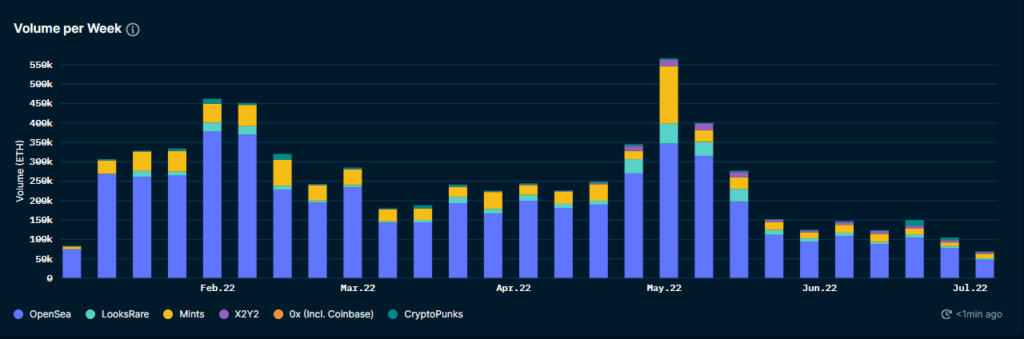
    According to a report from Nansen which was published on August 2, 2022, NFT buyers have spent 963,227 ETH on minting NFTs in the first half of 2022 alone. This comes to about $2.7 billion and shows just how much money has been pumped into the industry. 

    The data published by Nansen was based on information from January 1, 2022, to June 30, 2022, and revealed even more interesting NFT facts. For example, 50.7% of the ETH that was spent on minting remained with their initial projects while the remaining was circulated to wallets that were not related to these projects. This represented a decrease from 52.3% the year before to 45.7% now. 

    So, what collections were these billions of dollars spent on? According to Nansen, Pixelmon- Generation 1 was the top collection with 24,159 ETH raised. Other collections in the top five were Moonbirds, VeeFriends Series 2, Genesis Box and World of Women Galaxy. 

    Most of these mints took place on Opensea, though other platforms like 0x and Mints were represented in Nansen’s research. One of the factors that contributed to the first half of 2022 having such a high minting volume is the fact that many new NFT collections were launched, with February and May seeing the highest number of new collections. 

    But the fact that many new collections were launched does not mean that all of them were raking in millions in minting fees. On the contrary, the Nansen report acknowledges that a majority of mints were concentrated among the top collections. 

    $2.7 Billion Spent on NFT Minting in 2022

    “For the projects that have successfully raised ETH through their mint, almost two-thirds of these projects (65.8%, n= 9,229) raised below 5 ETH. The median amount raised by projects was 1.43 ETH, with the average being 59.4 ETH. A hundred and forty NFT collections have raised over 1,000 ETH. As such, the discrepancy between how much NFT collections raise through minting remains wide,” the report says. 

    The Price of Minting 

    While market conditions in the NFT space change all the time, this report shows that consumers are still spending on NFTs and that many new collections are constantly being launched. While not every project ends up a success a la Otherdeed, it shows that the space is still growing and that consumer demands are still being met.

  • Google AI Turns BAYC NFTs into Art Pieces 

    Google AI Turns BAYC NFTs into Art Pieces 

    Even if you’re not particularly interested in NFTs, you probably recognize pieces from the Bored Ape Yacht Club. The NFTs, which feature uninterested-looking apes, are some of the most famous in the world, appearing in blockchain-focused circles and even on custom Rolling Stone covers. 

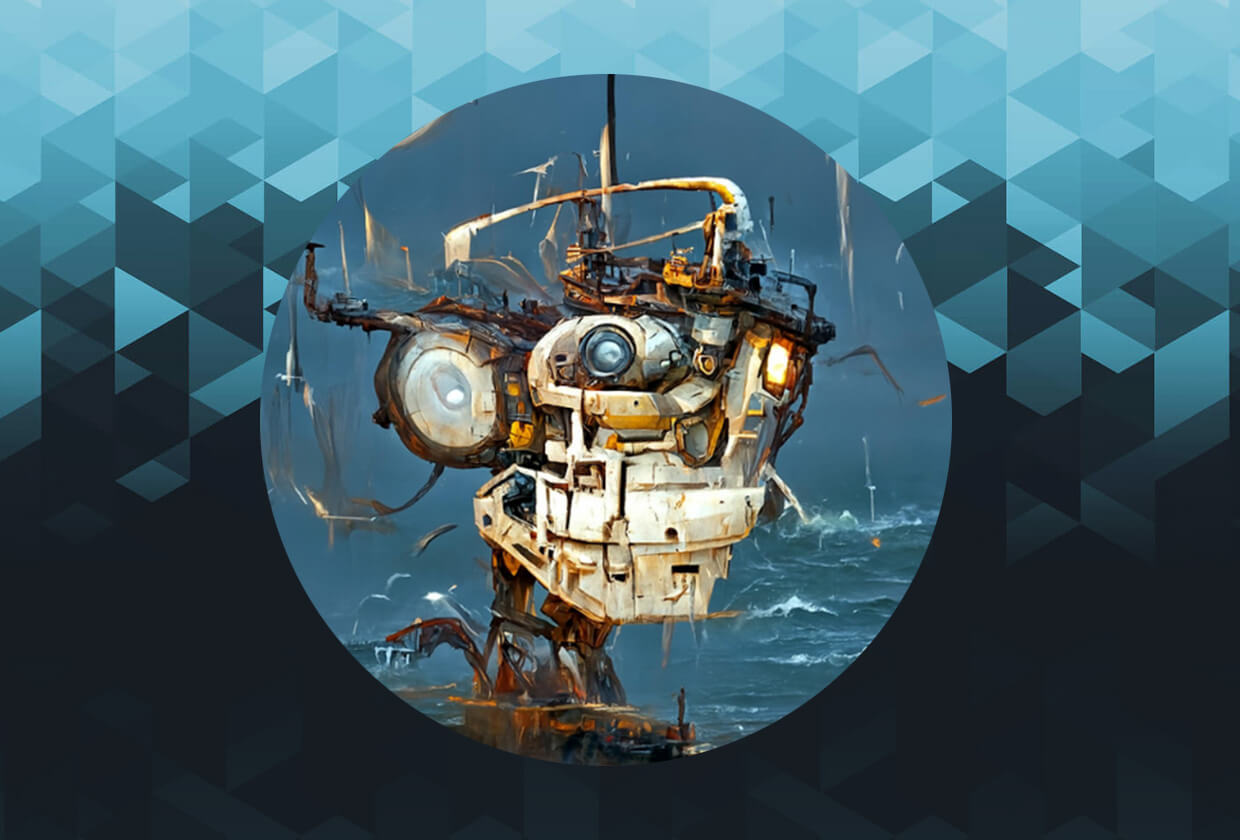
    Now, their image has been used in yet another interesting way as Google Cloud Neural Networks’ AI has successfully turned all 10,000 Bored Ape pieces into works of art. This new project, called Artsy Monke, shows off the capabilities of the AI’s functionality while also referring to one of NFTs’ most beloved collections. 

    AI Art 

    According to a statement, this artwork is a result of advancements in both AI and image diffusion techniques. It also used Google’s collaborative Notebook platform Colab, and its Cloud Computing service. To create the artworks, the AI was given some Bored Ape NFTs to act as a loose template but was also able to create the images using only text descriptions. 

    “We were able to take all ten thousand Bored Ape NFT images, and feed those into the machine as a loose canvas within which to frame the generative art […]”After that, it was a matter of teaching the machine to paint in the twenty different art styles we shortlisted, and then running multiple servers for several weeks to get the results we wanted,” says CryptoGrims, Artsy Monke’s in-house AI artist.

    The result of this was 10,000 artworks that might look abstract on the surface but take the shape of an Ape not dissimilar to the Bored Ape NFTs they are partially based on. All the pieces quickly sold out, with resells popping up on Opensea. But this isn’t the only NFT project that Google’s AI will be involved in. 

    Google AI Turns BAYC NFTs into Art Pieces 

    Reportedly, there are plans for Artsy Monkeland, a metaverse theme park that only holders of one of the 10,000 NFTs from the original collection can access. Once they do access this theme park, they can enjoy play-to-earn games.

    Apparently, this was the plan from the start to make the NFTs not only a collectable but a utility item as well. 

    “We wanted Artsy Monke to be pieces of art that you could hang on your wall, but also, by using Web3 technology, we can also let holders access the Artsy Monke games and earn real money. The more Monke NFT you hold, the more games you can play and the more money you can earn,” the team says.

    Find Your Bored Ape

    This new project highlights both the progress that has been made with artificial intelligence and the creativity of the NFT space. It is also quite telling that the NFTs were designed to act as passes into a virtual theme park and not just collectables.

    This shows that even while we want NFT collectables, there is a growing demand for more utilitarian ones and clearly, this demand is going to be met. Hopefully, the Monkeland theme park is launched soon and lives up to the hype.

  • Pearson Considering NFTs for Textbook Resales 

    Pearson Considering NFTs for Textbook Resales 

    For years, one of the constant issues facing publishers and authors was a lack of royalties from book resales and even certain direct sales. For example, if a book is released and sold by its original buyer to another person, there is limited tracking of that sale and thus, both the publisher and author lose out on potential royalties. 

    While this has cost the industry millions over the years, a solution might be on the horizon; NFTs. This comes as Andy Bird, the CEO of the publishing house Pearson, stated in a recent meeting that the company is considering NFTs to track resales. 

    The Art of the Resale 

    While the publishing world has struggled with getting royalties from resales, the NFT space has solved this issue since its inception. All NFTs are governed by smart contracts which are programmed before they are even released into the market. These smart contracts are often designed with the NFTs’ resale in mind, given how often they change hands. 

    The average NFTs’ smart contract stipulates that its original owner or buyer will get a cut of all resales, usually around 5%. That means that if such an NFT is resold 5 times, the original owner gets paid a cut of each sale price all five times. 

    Imagine that level of precision applied to the publishing world. The opportunities for resale royalties would be endless for authors and this was acknowledged by Bird himself. 

    Pearson Considering NFTs for Textbook Resales

    “Technology like blockchain and the NFTs allows us to pass through every sale of that particular item as it goes through its life,” he said.

    Many of the buyers of the academic books that Pearson publishes are students who would be looking to save money in any way possible. This has given rise to an online and real-life resale market for books, most of which do not give royalties to authors. 

    But Pearson’s interests in blockchain will not likely stop at NFTs. As Bird explains, the management of the company is looking into web3 and the metaverse and exploring what other ventures it may pursue. While nothing has been announced just yet, there has been talk of virtual classes and metaverse-based experiences for customers. 

    “We have a whole team working on the implications of the metaverse,” Bird said during the meeting. 

    Given how many industries are investing in NFTs these days, the world of publishing embracing them does not seem too far off.

    How NFTs Can Change the Market

    It is no secret that there is a massive second-hand market for practically everything in the world, from clothes to cars. But as NFTs become more popular, we might be seeing a massive change in how the resale market works. 

    More specifically, NFTs offer us a world where the original owners of virtually every asset, both physical and digital, can get rewarded in perpetuity for resales. This means not only a digital footprint of where and when resales take place but a permanent passive income for many.