Category: News

  • Yuga Labs Facing Possible Lawsuit 

    Yuga Labs Facing Possible Lawsuit 

    Pretty much everyone who is involved in the NFT industry (and even many outside it) is familiar with Yuga Labs. The company is behind the iconic Bored Ape Yacht Club NFT collection and also acquired several other top collections this year and secured a valuation of $4 billion. 

    But with all this success has come some legal drama, from rumours being peddled about creators under the company to being targeted by scammers. Now, Yuga Labs has another legal issue brewing; a possible class action lawsuit. This comes as the law firm Scott and Scott has begun seeking out possible defendants. 

    The Brewing Lawsuit 

    On its website, the law firm alleges that Yuga Labs had induced investors into buying their Bored Ape NFTs and Ape Coin cryptocurrency with the implication that both had high growth potential. However, the law firm claims that the Bored Ape’s growth was dependent on its continuous promotion and did not have any underlying use case. 

    “The YUGA LABS leadership used celebrity promoters and endorsements to inflate the price of the company’s NFTs and token, by generally promoted the growth prospects and change for huge returns on investment to unsuspecting investors,” the page says. 

    The firm also claims that the projects were soon unravelled after investors were convinced to buy the NFTs and cryptocurrency. Apparently, the assets lost over 87% of their value from their price high on April 28, 2022. This, the firm believes, is a case against Yuga Labs and is now seeking to bring a class action lawsuit against the company. On the site is a form for anyone who bought Bored Ape NFTs or Ape Coin between April 2022 and June 2022 and has suffered losses as a result to contact them. If the firm can get enough respondents, a class action lawsuit could be in the works soon. 
    Yuga Labs Facing Possible Lawsuit 

    This accusation is not unlike the ones that get directed towards the NFT space all the time. As far as many are concerned, NFTs are nothing but a scam that should not be taken seriously. And with the current slump that blockchain-based assets have seen over the last few months, many feel vindicated in these accusations. Whether the dip in the value of some NFTs is a legitimate lawsuit is yet to be seen and only time will tell how this case will unravel if it makes it to court. 

    NFTs in Court 

    For a corporation on the level of Yuga Labs, some legal disputes are practically inevitable and this is just one of several that have popped up this year. While some might argue that Scott and Scott have a legitimate case against Yuga Labs, others would beg to disagree.

    For both lovers and loathers of NFTs, it is only a matter of time before we find out what a judge thinks about this possible class action lawsuit. Can NFT creators be sued for underperforming assets? Or is it simply a case of buyers’ remorse with no legal backing?


  • Ukraine’s War NFT Museum Has Raised $1 Million Since Its Launch 

    Ukraine’s War NFT Museum Has Raised $1 Million Since Its Launch 

    Remember a few months ago when the Ukrainian Ministry of Digital Transformation began minting and selling NFTs that document the progression of the Ukraine-Russia conflict? When it was first announced, it was one of the more interesting uses of NFTs by a world government and signalled not just fundraising efforts but historical preservation as well.

    Now, months later, the efforts of the META History Project seem to have been a success. Recent reports show that the ministry has raised over $1.3 million from the sales of these NFTs which will be used for the support of the Ukrainian troops who have been at the forefront of the war.

    Funds Raised for Ukraine 

    Since the initial launch in March 2022, two NFT collections have been released by Ukraine’s Meta History Museum and a third is due to launch in late July 2022. Given how successful the first two have been, the latest one is expected to bring in much-needed funds as well.

    “The idea of immortalizing the history of events in works of art and offering them to those who want to support Ukraine proved viable from day one. The drop in March brought in over $600,000 in 24 hours ⎯ 1,282 of 2,178 NFTs were sold. I think META HISTORY can make a significant contribution to supporting Ukraine by highlighting the truth through NFT art and selling it until the war is over,” says Brittany Kaiser, META HISTORY ambassador.

    Ukraine's War NFT Museum Has Raised $1 Million Since Its Launch

    The new collection will include mediums such as 3D and abstract art and, like its predecessors, will be sold to support Ukrainian troops. Since the war began, the role of blockchain-based assets has been pronounced. From the official collections backed by the Ukrainian government to even private companies selling NFTs to fund the troops, blockchain has certainly taken centre stage.

    With this new NFT drop, supporters will be able to get an even closer look at the assets, with behind-the-scenes footage of the making of the NFTs and information from the artists behind them. As VK, the founder of META HISTORY museum explains, there are also plans to improve the user experience over time. 

    “We are now working to expand its capabilities by adding more options to allow more people to buy artwork. And along with the next drop, free mint will be implemented, we hope. There will also be regular metaverse events where you’ll learn more about the project and the behind-the-scenes,” he says. 

    NFTs’ Role in the Conflict 

    NFTs have become an unlikely tool in the ongoing Ukraine-Russia conflict, with massive fundraising being done through them in both the private and public sectors. In future world events, we will likely see NFTs being used even more, whether for cultural and documentation purposes or for fundraising. 

    These not only benefit different organizations but also make NFTs more visible and accepted within the mainstream world. If this can be leveraged properly, we will see even more positive visibility for NFTs in Ukraine and beyond.

  • Barcelona FC Launches First NFT Collection

    Barcelona FC Launches First NFT Collection

    For NFT lovers, it is always an encouraging sign when first-time NFT collections are announced, especially for mainstream institutions. This is because they act as indications that NFTs are truly being accepted around the world and are constantly breaking new ground. 

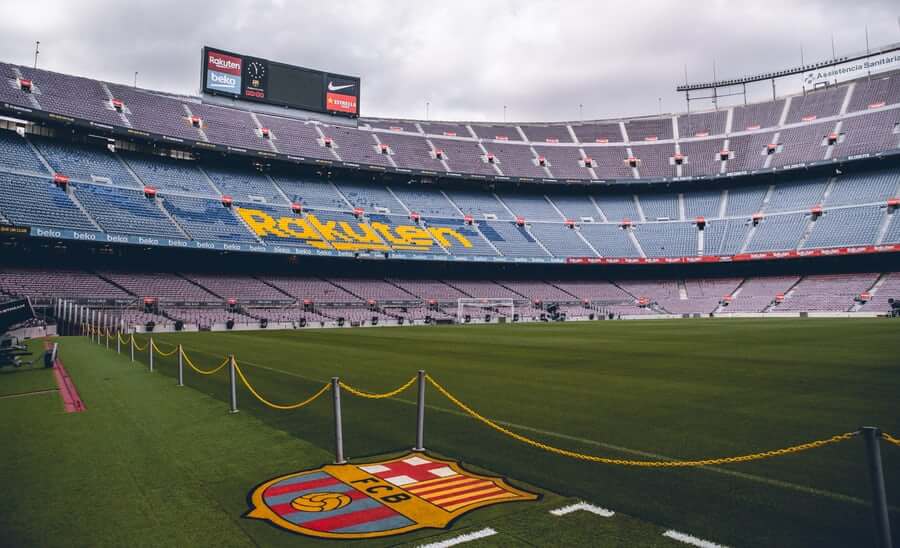
    One of the latest of these types of announcements comes from Barcelona FC. The iconic and globally-renowned football club has just announced its first NFT collection that will immortalize many of the club’s most iconic moments over the years and will go on sale at Sotheby’s New York.

    Football, Immortalized

    This new collection is to be called “In a Way, Immortal” and will feature 10 iconic moment’s in the club’s history, with each piece being released over time. The first piece has already been unveiled and is an audio-visual artwork that depicts Dutch player  Johan Cruyff’s iconic goal score from December 1973. This artwork was made in collaboration with BCN Visuals, a digital media company, and will come with perks for the buyer.

    Those who own NFTs from the collection will receive VIP Club-based benefits and experiences and will also be named a Barça Digital Ambassador. Some of the experiences outlined so far include access to meet and greets, a visit to La Masia, and even the right to hand over the ball before a friendly match. The online bidding period for the NFT began on July 21, 2022, and the live auction will hold on July 29, 2022. 

    Barcelona FC Launches First NFT Collection

    In its official announcement, Barcelona FC also gave some information about how the audio-visual project came to life. As per the announcement, it took a team of 40 computer graphics and visual effects experts 10,000 production hours to complete the project. The audio accompanying it was also performed by a 30-piece orchestra and incorporated actual sounds from Camp Nou stadium and FC Barcelona supporters.

    The club has also explained that this new move is in an effort to connect with even more of its fans, especially millennials, zillennials, and Gen Zs. 

    “Barça with more than 400 million followers in social networks is constantly opening new ways to connect with our fans, and we believe that with the Clubs new NFT strategy we found a unique opportunity to continue growing and consolidating the Barça brand,” says Joan Laporta, President of FC Barcelona in a statement. 

    Here’s to hoping that we get even more projects from the club. 

    Immortalization Through NFTs

    When many of us think of NFTs, we tend to think of animated images sold for thousands of dollars. But these days, we are seeing NFTs take even more complex and creative forms. Like with this collection from Barcelona FC, many more visual and audio mediums are being incorporated into the NFT space. 

    This shows that even as we immortalize many things on the blockchain, we can do so in an unlimited number of ways. With even more major companies getting into the NFT space, we will hopefully see the limits of what we can do with NFTs tested even more.

  • BAYC NFT Owner Loses 100 ETH in Joke Sale Gone Wrong

    BAYC NFT Owner Loses 100 ETH in Joke Sale Gone Wrong

    While the world of blockchains and NFTs are very exciting and complex, those who deal within it are always warned and given certain safety precautions to keep in mind. One of these is to always double-check and be sure of what transactions they authorize. This is because blockchain-based transactions, once completed, cannot be reversed. 

    One NFT collector learned this the hard way after he lost over $150,000 worth of Ethereum after he placed a joke bid on an Ethereum Naming Service (ENS). Unfortunately for him, his  ‘joke’ bid was accepted and he is now short of 100 ETH.  

    Details About the Sale

    The first thing to understand is what exactly an ‘Ethereum Naming Service’ is. These services are domain names that are attached to a crypto wallet. You might have seen some people online have such names like John.eth. These are not only used as branding but offer an easy way to link one’s presence in web3. 

    Needless to say, Ethereum name services have become rather popular and while some people are paying decent amounts of money for them, others think they are silly. An NFT collector who goes by the name of ‘Frank’ online was one of these and wanted to troll the ENS-loving community in a move that ultimately backfired.

    BAYC NFT Owner Loses 100 ETH in Joke Sale Gone Wrong

    His plan was to register the domain name stop-doing-fake-bids-its-honestly-lame-my-guy.eth and then place a bid on it himself. He explained to his Twitter followers that he would place a bid of 100 ETH on the domain name so that the ENS bot (a Twitter account that posts about ENSs that are for sale) would tweet out the domain name. The point of this was to poke fun at people who deal in these domain names and get a laugh out of it. 

    “What phrase or meme do you want me to have the ens bot tweet out as a .eth address with a 100 WETH bid? Lol I would have to mint the ENS address myself too,” he tweeted at the time. 

    Where it All Went Wrong 

    Unfortunately, his stunt backfired. First, the domain name that he registered was actually bought by someone for  1.9 ETH and he was initially happy about it. The issue came when he forgot to cancel his initial bid of 100 ETH which was still active. After buying the domain name, the new owner accepted his joke bid and his 100 ETH was automatically paid. 

    Frank soon realised his error and announced to his followers what had happened but seemed to take his mistake in stride. 

    “Oh no, I lost 100 ETH. I was celebrating my joke of a domain sale, sharing the spoils, but in a dream of greed, forgot to cancel my own bid of 100 ETH to buy it back. This will be the joke and bag fumble of the century. I deserve all of the jokes and criticism,” he tweeted.

    Needless to say, this is yet another example of being careful with blockchain, especially when dealing with money.

  • Square Enix Announces NFT Project

    Square Enix Announces NFT Project

    Last week, NFT fans learned the disappointing news that Minecraft has banned NFTs on its servers and publicly disavowed third-party NFTs based on its features. The reason for this, the company said, was to discourage NFTs from being sold at inflated prices and their speculative nature taking away from the gaming experience. 

    Luckily, it seems that other major gaming projects might be interested in NFTs after all. Around the same time that Minecraft made its announcement, Square Enix, a Japanese game publisher, announced a partnership with blockchain gaming firm Enjin. This partnership will see the company release NFTs for one of its most famous titles, the Final Fantasy series. 

    Final Fantasy Enters the Metaverse 

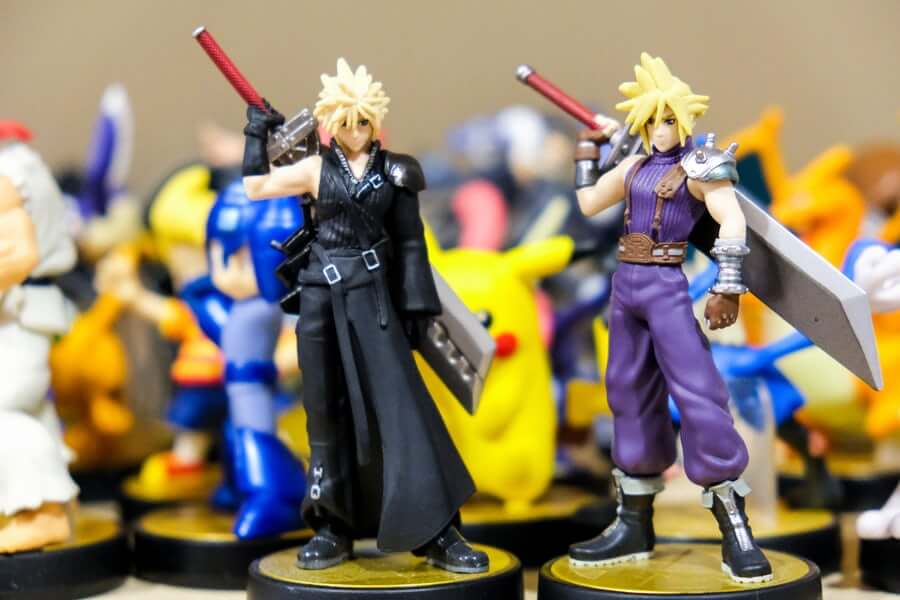
    As per the announcement, the NFTs will be created for the Final Fantasy VII game to commemorate the original game’s 25th anniversary. As such, the NFTs will be tied to physical action figures and physical trading cards, the first batch of which will be released in the Spring of 2023. 

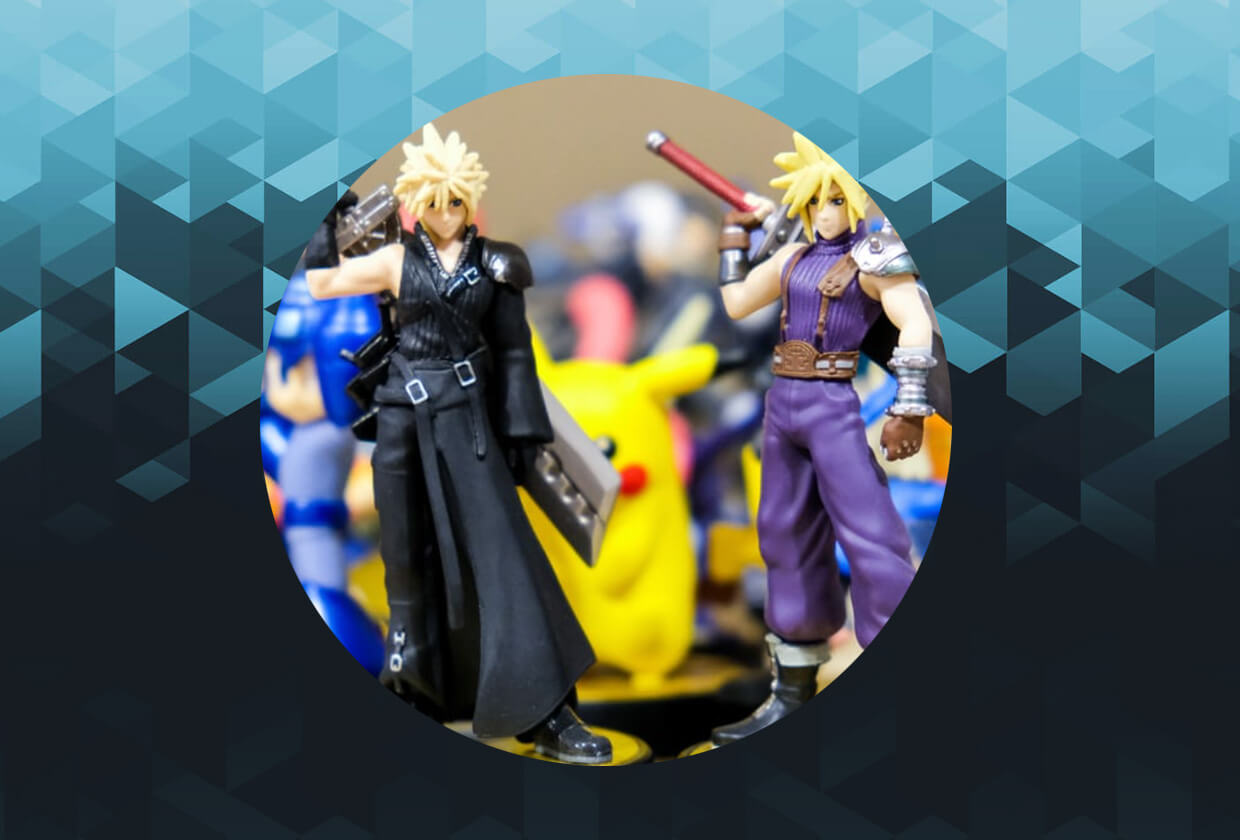
    Each pack of the trading cards, which will reportedly sell for $4, will come with a code to redeem a digital trading card minted by Enjin. Later in 2023, an action figure of the game character Cloud Strife will be released that will also come with a redeemable NFT. For those who buy the standard action figure, the NFT will be a certificate of authenticity. Those who buy the Digital Plus Edition will get a digital replica of the action figure as well. 

    Along with the announcement of the NFTs, the management of Enjin has explained that this partnership is not only a way to give something special to the fans but acts as a means of driving blockchain adoption. 

    Square Enix Announces NFT Project

    “This partnership marks a coming-of-age phase for digital assets and entertainment; Square Enix, an esteemed developer with iconic intellectual property, is paving the way for the industry. By using Efinity, fans can experience interactive NFTs without even realising they’re on the blockchain. Enjin can establish the next phase of growth in blockchain entertainment, merging curiosity and creativity,” says Enjin exec Witek Radomski.

    The action figures are now available for pre-order and since the announcement of the NFTs was made, there have been mixed responses from the gaming sector. It seems we’ll have to wait till next year to see whether or not fans are willing to spend money on this new endeavour. 

    The Mixed Responses of Gaming Fans to NFTs

    At this point, it is clear that there is no unanimous stance on NFTs within the gaming community. While some love NFTs, others do not and applauded Minecraft’s decision to ban them. Some of the common concerns include NFTs’ potential impact on the environment (Enjin has reiterated that it uses the energy-efficient Polkadot blockchain) and simply not understanding them as a concept.

    Companies like Square Enix seem to be pushing on and pursuing NFTs within their projects despite the criticism but only time will tell if NFTs will have a long-term place in gaming.

  • Russia Bans NFTs as Payment

    Russia Bans NFTs as Payment

    Digital assets might be many things but limited is not one of them, especially when it comes to their applications. Over the years, we’ve seen many things that can be done with digital assets like cryptos and NFTs; they can be investment vehicles, collectables, utility tools, and a means of payment. 

    Unfortunately for those in Russia, the use of NFTs and other digital assets for making payments has been severely restricted. This comes as the Russian State Duma has signed a new law that prohibits the use of digital assets to make payments across the country. 

    An End to NFTs in Russia?

    It is worth noting that unlike other countries like China, Russia is not outright banning the use of cryptocurrency altogether. Instead, the law, which was signed on July 14, 2022, simply states that digital assets cannot be used to pay for goods and services. 

    “It is prohibited to transfer or accept digital financial assets as a consideration for transferred goods, performed works, rendered services, as well as in any other way that allows one to assume payment for goods (works, services) by a digital financial asset, except as otherwise provided by federal laws,” the law says. 

    Russia Bans NFTs as Payment

    Over the years, Russia has had an interesting relationship with digital assets. Earlier this year, Russian President Putin publicly said that Russia was primed to be a hub for cryptocurrency activity, especially crypto mining. Despite all of this, the Russian government has outlined several anti-crypto laws, including one in 2020 that prohibits crypto from being used as a payment method. 

    This new law seems to be an offshoot of the previous and ensures that all digital assets, such as NFTs, cannot be used for payment. Needless to say, this seems counter-productive given Putin’s statements. 

    The Role of Digital Assets in the Ukraine-Russia Conflict 

    As most of us know, Russia has been in the news this year for its ongoing conflict with Ukraine and in the world we live in today, digital assets have come into the mix. First, following the declaration of war, many companies, including crypto and blockchain companies, exited Russia. 

    Many Russian nationals also found themselves unable to access services by crypto exchanges in line with international sanctions placed on the country. Lately, there have been rumours of Russia leveraging cryptocurrency to evade sanctions to a degree, the same way North Korea was accused a few years back. So far, that story is still unravelling. 

    Ukraine has also not been left out of the mix when it comes to digital assets. Currently, the Ukrainian government is auctioning NFTs to raise funds for its troops and even private companies have gotten in on the mix. One company in Georgia famously sells off pieces of ‘Russia’ and donates the proceeds to Ukraine. 

    NFTs and other digital assets have become a major part of the world and as such, this new law is certainly coming at an interesting time. One can only hope that its effect on everyday Russians and the country as a whole is not detrimental.

  • Minecraft to Not Allow NFTs on Servers

    Minecraft to Not Allow NFTs on Servers

    NFTs are being used in a lot of things these days but especially in video games. Perhaps because of their potential use as collectables, many video game companies have started including NFTs, such as Ubisoft and Gamestop. 

    But this isn’t the case across the board and some video game companies don’t seem as eager to embrace NFTs. Case in point, Minecraft, a popular video game, released a blog post on July 20, 2022, addressing NFTs. Needless to say, it was not an announcement of NFTs being added to its operations.

    Minecraft Shuns NFTs

    As per the blog post, the company had been getting a lot of requests from users to clarify its position on NFTs. In response, the company released this statement and announced that it will be updating its guidelines to give more clarification. 

    This was especially necessary because, as the post explains, a number of creators had been launching NFTs that make use of Minecraft concepts like skins and worlds. But Minecraft as a company has stated plainly that they do not support NFTs for reasons of preventing scarcity. 

    As per the post, Mojang studios, the company behind Minecraft, wants to make sure that all of its users have access to the same features. Because NFTs are often used to give access to exclusive features not available to all, they are incompatible with Minecraft. 

    Minecraft to Not Allow NFTs on Servers

    “​​To ensure that Minecraft players have a safe and inclusive experience, blockchain technologies are not permitted to be integrated inside our client and server applications, nor may Minecraft in-game content such as worlds, skins, persona items, or other mods, be utilized by blockchain technology to create a scarce digital asset,” the blog post says. 

    It also adds that the speculative investment and pricing often attached to NFTs take away attention from the actual gaming experience, which the company does not want. There is also consent about some of the third-party NFTs that have popped up recently. Some of these, the post says, might be sold at inflated prices or might be scams altogether. As such, Minecraft is taking a firm stance against them.

    “[..] to ensure that Minecraft players have a safe and inclusive experience, blockchain technologies are not permitted to be integrated inside our Minecraft client and server applications nor may they be utilized to create NFTs associated with any in-game content, including worlds, skins, persona items, or other mods,” the blog post says.

    The Implications of the Statement  

    While NFTs have a growing presence in the video game sector, they are clearly not being accepted across the board. In the case of Minecraft, the issue is not just concerns about rug pulls and inflated prices.
    At its core, Minecraft seems to disagree with NFTs as a concept. But one of the biggest appeals of NFTs to many people is the ability to get access to exclusive features and experiences. This has made the digital asset the darling of many video game projects but clearly, Minecraft will not be joining the mix.

  • US Agency Issues Advisory on NFT Asset Reporting

    US Agency Issues Advisory on NFT Asset Reporting

    NFTs are popular all over the world but current data shows that they are particularly popular in the United States. A recent Seton Hall University study, for example, estimated that as much as 25% of US households have some form of NFT holdings. Naturally, some of these households will have some government officials in them. After all, while public opinion on NFTs varies, they are a worthwhile investment for many. 

    Now, a new advisory from the United States Office of Government Ethics is trying to outline the situations in which these officials should be required to disclose their NFT holdings. 

    Full Disclosure

    Because digital assets like NFTs are so new, the rules on when they should be disclosed are often a bit murky. But this new advisory, put forward by director Emory Rounds III, is trying to create some symmetry. According to the advisory, all NFT assets held by government officials that are worth at least $1,000 should be reported. 

    This includes both fractional NFTs and collectables. The advisory has put forward a list of 7 questions which will help determine whether or not an NFT needs to be reported. All these questions revolve around whether or not the NFT is being held as an investment or for the production of income. 

    Among the questions is whether or not the NFT was bought for aesthetic reasons, whether it is deemed a rare or expensive NFT, if the filer is in the habit of collecting NFTs, and so on. For all of the questions, an affirmative answer could indicate that the NFT is an asset and thus, should be declared. 

    US Agency Issues Advisory on NFT Asset Reporting

    Public officials have been directed to fill out OGE Form 278e as part of reporting activities and this will require them to state the value and income amount of all the NFTs that are eligible. Interestingly, this advisory targets NFTs that might represent things like real estate but excludes those that might represent personal items like family memorabilia. 

    This shows that the Office of Government Ethics is making the distinction between NFTs that could be investments and those which exist for sentimental value. This makes sense as even within the NFT space, the difference is being made clear. 

    Many more NFT projects are hitting the market and there is a clear difference between, for example, a Bored Ape NFT and a freely-given one to commemorate a historical event.

    Uniform Practices

    As the history of cryptocurrency will show us, creating laws, especially reporting and tax laws, to govern the use of digital assets is a tricky affair. For years, paying taxes on blockchain-based assets was simply not done. It took a while for a proper reporting code to be established and this was not without its ups and downs. 

    Now, NFTs are going through the same process. It is, however, a necessary process, not only to ensure compliance which helps the industry stay on the right side of the law but also to make sure that further adoption can be achieved.

  • LG Developing TV for Issuing NFTs

    LG Developing TV for Issuing NFTs

    Many of us already know that we can use and interact with NFTs on our desktops, laptops, and mobile phones and probably already do so. But what if we could take this a step further? What if we could interact with NFTs on our TVs at home?

    This might seem like a farfetched idea but LG, a top electronics company, seems to be pursuing this concept. This comes as the company has filed a patent for something called ‘LG Art Lab’ which involves, among other things, TV software for issuing and trading NFTs. 

    Coming to a Screen Near You

    In a tweet from lawyer Mike Kondoudis, some details were revealed about LG Art Lab and what it will entail. This includes software for virtual currency, software for NFT and crypto transaction management, TV software for issuing NFTs, and much more. 

    The patent, which was filed on July 14, 2022, shows LG’s growing interest in the NFT space and could have big implications for how we view and use NFTs. A few months ago, the company announced that it was working with artist Refik Anadol to create NFTs that could be displayed on its Transparent OLEDs. 

    In the official announcement at the time, the company reiterated its commitment to exploring new technologies and new ways of displaying visual content. 

    “We will continue innovating solutions that provide completely unique customer experiences with infinite scalability by harnessing the power of our one-of-a-kind Transparent OLED technology,” said Jin Min-kyu, Head of Life Display Promotion Division at LG Display.

    LG Developing TV for Issuing NFTs

    Now, months later, we have some information about where LG is taking its NFT exploration. While this is clearly in its early stages, it will be interesting to see what comes of this. Just imagine being able to carry out NFT and crypto transactions from a television screen. 

    Not only would it be an exciting new way to use digital assets but it is one that literally brings the assets to your home. These days, we’re seeing a lot more electronics companies play around with NFTs as a concept, such as HTC releasing a phone that is designed to be compatible with NFT use. Samsung, another top electronics company, has even gone as a far as developing an NFT platform for its televisions. 

    All these, along with LG’s new patent filing, show that as NFTs become popular, more companies are working to cater to the market. 

    NFTs of the Future

    So, with all these patent filings and developments in the electronics world, what does this mean for NFT users going forward? The most likely outcome is that NFTs will be seen as less abstract concepts and will be more present in our everyday lives. 

    As LG’s statement regarding its Refik Anadol collaboration pointed out, this sort of technology is not just limited to TVs in the home but includes digital displays that can be put in public places. Needless to say, we can look forward to a future with NFTs on our phones, computers, TVs, and everywhere else with a screen.

  • Premint Suffers Hack with Over 300 NFTs Stolen

    Premint Suffers Hack with Over 300 NFTs Stolen

    NFT security is a hot-button issue these days, and for good reason. Every other week, there is one story or the other about a platform or account getting hacked and criminals trying to make away with users’ NFTs, often to the tune of hundreds of thousands of dollars. 

    The latest hack was targeted at Premit, an NFT registration site. According to reports, hackers were able to infiltrate the site and place a fake pop-up link that let them gain access to users’ wallets. An estimated $400,000+ worth of NFTs has also been stolen in this hack. 

    Hack Details 

    The hack in question took place on July 17, 2022, and involved a pop-up which prompted users to verify their wallet ownership. While some people immediately found it suspicious and took to social media to speak about it, not everyone was so lucky. 

    As per reports, the hackers were able to make away with over 320 NFTs worth $400,000. Some of the NFTs that were stolen were allegedly from collections like Bored Ape Yacht Club and Moonbirds. Unfortunately, soon after the hack, many of the NFTs were sold on various marketplaces, making them even harder to recover. 

    Premint Suffers Hack with Over 300 NFTs Stolen 

    To make things worse, the funds that were raised from selling the stolen crypto were sent to Tornado Cash, a crypto mixing service that essentially erases the digital footprint of the tokens. Needless to say, rectifying the issue might be an uphill battle.

    The day after the incident, Premint sent out a number of tweets acknowledging the hack and shedding some light on what had happened. 

    “This issue only affected users who connected a wallet via this dialog after midnight Pacific time. Thanks to the incredible web3 community spreading warnings, a relatively small number of users fell for this. We took the site down early this morning to fix the issue,” the tweet said, adding that management was collating a list of wallets that had been affected and flagging the wallets that had been involved in the theft.

    Soon after, Premit also launched a new feature that allows users to log in to their accounts from Twitter and Discord without having to enter their wallet details. The platform had planned to roll out the feature later but did so earlier following the entire hacking incident. 

    More updates are expected from Premint as time goes on. 

    Securing NFT Assets 

    Hacks and overall asset security have been major issues within the NFT space for a while now and unfortunately, attacks like these have become all too commonplace. Whether it is a Twitter account or a whole website, platforms are being hacked and malicious links are being posted to gain access to users’ digital asset wallets. 

    Unfortunately, many of these schemes are becoming more sophisticated and harder to detect even by experienced users. But just like with the new feature rolled out by Premint, it is up to those within the industry to develop tools and resources that can curb the likelihood of these attacks.